The Life of a Photo – From ‘Snap’ to Upload

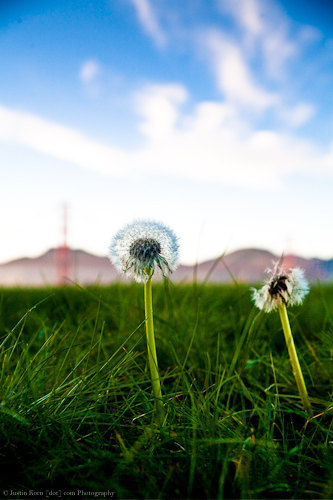
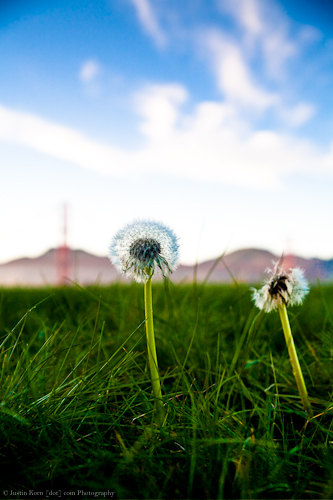
Dandy Day by Justin KornI’ve sat on this post for a few months now, and I think it’s ready to come out and play…

After Dandy Day made it over to FriendFeed, a conversation stirred around how I processed that particular image.  After looking at the dramatic processing this particular photo went through (not all my photos go through such a dramatic process), I thought it would be the perfect image to make a point with.

I’ve been thinking about doing a post about the power of processing for a long time.  It’s been said that a photographer is only as good as their eye for composition.  If they can see a unique vision and compose the picture, everything else falls into place.

I agree, the eye is the FIRST key ingredient to the formula.  But, in these digital days, the ability to process what you snap becomes just as important.  Now, don’t get me wrong, I strive to capture the best image possible right out of the camera.  However, like this demonstration will show, that does not always happen.  And when it doesn’t, I put a lot of effort and time into making my final photos look perfect (at least to my liking).  I don’t waste my time with images that can’t be saved, but you would be surprised to see what images can be saved…and that is the point of this post.

If you do plan on experimenting with post processing, I strongly encourage you to utilize the ability of your camera to shoot in RAW format.  Not all cameras have this ability, but if yours does, use it.

Alrighty, are you ready for the demo?  The below image is NOT the identical exposure as Dandy Day.  I used the same processing steps with both pictures, so I’ve used it for the demonstration.  Below is the original image leading all the way to the final image…

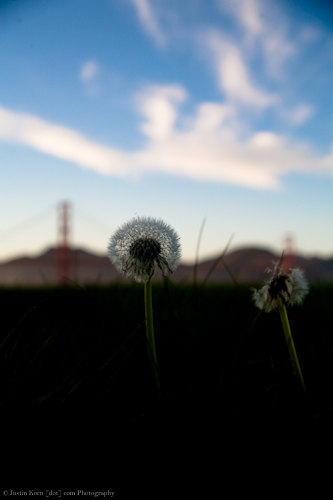
Original

Original (bleh!)

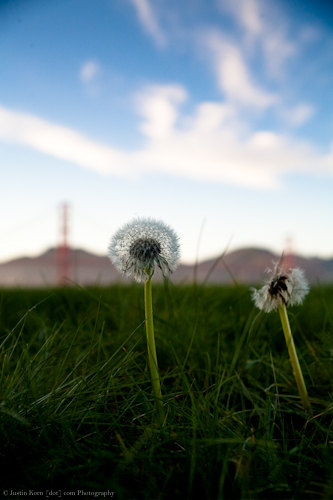
Step 2

Apply the Lightroom 'Direct Positive' Preset

Add Graduated Filter (from bottom to top) with Exposure +1.70

Add Graduated Filter (from bottom to top) with Exposure +1.70

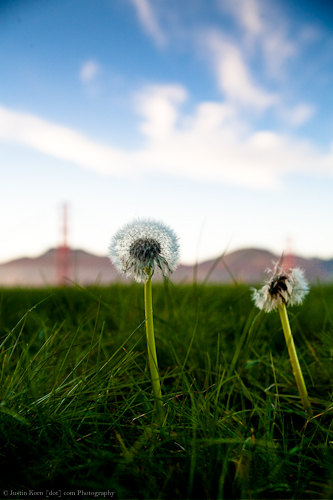
Brightness + 45, Contrast +55, Saturation +57, Clarity +37 only on Graduated Filter

Brightness + 45, Contrast +55, Saturation +57, Clarity +37 only on Graduated Filter

Adjusted White Balance, Contrast +20, Brightness +7, Clarity +26, Vibrance +43, Saturation - 7 on entire image

Adjusted White Balance, Contrast +20, Brightness +7, Clarity +26, Vibrance +43, Saturation - 7 on entire image

Adjusted White Balance, Contrast +20, Brightness +7, Clarity +26, Vibrance +43, Saturation - 7 on entire image

Adjusted Tonal Curves

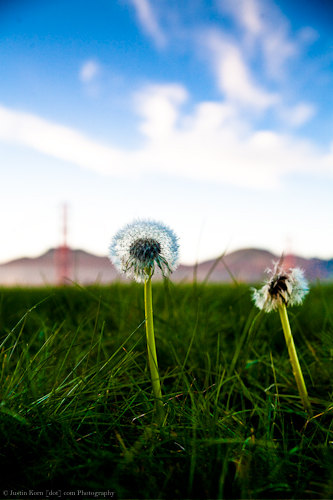
Final after removing Dust Spots and adjusting the Noise

Final after removing Dust Spots and adjusting the Noise

What a difference, huh?!?!  As you can see, this picture, out of the camera, was nothing special and barely worth keeping.  After spending sometime in Lightroom, it has been upgraded to a decent photograph definitely work keeping.

I hope you’ve enjoyed this short demo.  If you have any questions or specific steps you’d like to see further information on, feel free to let me know in the comments.

Till next time…

Related Posts with Thumbnails
Be the first to rate this post: 1 Star2 Stars3 Stars4 Stars5 Stars
Come on, give this post some love!
Loading ... Loading ...
Categorized: Tips & Tricks
  • http://www.gabbylewis.com/ Gabby

    I didn’t know you could apply changes to filters like you do to layers in photoshop! Ummm how did you do that please?!

    • http://www.justinkorn.com/ Justin Korn

      Gabby,

      In Lightroom 2.0, Adobe has provided two very important and powerful tools (in my opinion): the Graduated Filter and the Adjustment Brush. With both of these tools, you can manipulate the exposure, brightness, contrast, saturation, clarity, sharpness, and even the color independently for each instance these tools are applied. I can’t go into full details within this comment, but perhaps a future tutorial is due? In the meantime, I strongly encourage you to play with these tools as they are the true power behind what Lightroom offers.

      Thanks for reading!

      Justin

  • http://www.gabbylewis.com Gabby

    I didn’t know you could apply changes to filters like you do to layers in photoshop! Ummm how did you do that please?!

    • http://www.justinkorn.com Justin Korn

      Gabby,

      In Lightroom 2.0, Adobe has provided two very important and powerful tools (in my opinion): the Graduated Filter and the Adjustment Brush. With both of these tools, you can manipulate the exposure, brightness, contrast, saturation, clarity, sharpness, and even the color independently for each instance these tools are applied. I can’t go into full details within this comment, but perhaps a future tutorial is due? In the meantime, I strongly encourage you to play with these tools as they are the true power behind what Lightroom offers.

      Thanks for reading!

      Justin

  • Pingback: Weekend Perusing: FL-106 | Your Photo Tips

  • http://davidccooperphotography.squarespace.com/ David C. Cooper

    You must’ve left some steps out of your tutorial. The final image at the top shows the clouds and bridge in the background in focus. Your guide ends with the background very blurry.
    What did I miss?

    • http://www.justinkorn.com/ Justin Korn

      Hey David,

      The picture at the top of the of the post (“Dandy Day”) is actually a different picture than the one I used for the tutorial. I used a smaller f-stop on the image used for the tutorial causing the depth of field to be shallower and therefore causing the background to be a bit more blurry.

      Hope that clears things up. Thanks for reading.

      Justin

  • http://davidccooperphotography.squarespace.com David C. Cooper

    You must’ve left some steps out of your tutorial. The final image at the top shows the clouds and bridge in the background in focus. Your guide ends with the background very blurry.
    What did I miss?

    • http://www.justinkorn.com Justin Korn

      Hey David,

      The picture at the top of the of the post (“Dandy Day”) is actually a different picture than the one I used for the tutorial. I used a smaller f-stop on the image used for the tutorial causing the depth of field to be shallower and therefore causing the background to be a bit more blurry.

      Hope that clears things up. Thanks for reading.

      Justin

  • http://friendfeed.com/mikeroblogger Michael Fidler

    Nice post and nice work on the photo too.I don’t know why, but I’m still amazed at what can be accomplished with today’s post production tools. My problem is usually second guessing myself. I always wonder if I’m over doing something. Because there are so many options, I tend to go with a “less is more” approach and just hope its right. I finally got the new Lightroom, and I’m looking forward to spending whatever time it takes to get familiar with it.

    • http://www.justinkorn.com/ Justin Korn

      Michael,

      Thanks! I agree, it is quite amazing what can be done. When I first started with digital, I used to only do the bare minimum, basically anything I could do in a darkroom. I then read somewhere on a photography forum (not an exact quote) “that digital photography is still photography, but a new form of the art. Utilizing the tools available is not cheating, it’s just different.” Since then, I’ve let myself go a little with the processing. I still attempt to keep my photographs looking “real,” but I continue to utilize the tools I have to make the final photograph look and feel how I envision it.

      You are going to love Lightroom!

      Happy Processing,
      Justin

  • http://friendfeed.com/mikeroblogger Michael Fidler

    Nice post and nice work on the photo too.I don’t know why, but I’m still amazed at what can be accomplished with today’s post production tools. My problem is usually second guessing myself. I always wonder if I’m over doing something. Because there are so many options, I tend to go with a “less is more” approach and just hope its right. I finally got the new Lightroom, and I’m looking forward to spending whatever time it takes to get familiar with it.

    • http://www.justinkorn.com Justin Korn

      Michael,

      Thanks! I agree, it is quite amazing what can be done. When I first started with digital, I used to only do the bare minimum, basically anything I could do in a darkroom. I then read somewhere on a photography forum (not an exact quote) “that digital photography is still photography, but a new form of the art. Utilizing the tools available is not cheating, it’s just different.” Since then, I’ve let myself go a little with the processing. I still attempt to keep my photographs looking “real,” but I continue to utilize the tools I have to make the final photograph look and feel how I envision it.

      You are going to love Lightroom!

      Happy Processing,
      Justin

  • http://quotidian-photography.blogspot.com Jessica

    I love Lightroom, it’s amazing what you can do with it. However, I have a couple questions about your specific processing. Your final image loses a lot of detail in the bottom of the sky and the bridge, you’ve effectively ‘blown out’ those areas with your graduated filter.

    Why didn’t you use the adjustment brush and paint back in some negative exposure in those areas to retain the detail? Or do you not care about the detail in the sky and the bridge?

    Anyway, I love to see other people’s workflow, I’m still learning more and more about Lightroom every day. Thanks for an excellent post.

    • http://www.justinkorn.com Justin Korn

      Hey Jessica,

      I’m assuming you are referring to the picture at the top of the post in relation to the “final” picture at the bottom of the post. Like I mentioned above, the picture at the top of the of the post (”Dandy Day”) is actually a different picture than the one I used for the tutorial. I used a smaller f-stop on the image used for the tutorial causing the depth of field to be shallower and therefore causing the background to be a bit more blown out and lacking detail.

      Thanks for reading and commenting.

      Justin

  • http://quotidian-photography.blogspot.com/ Jessica

    I love Lightroom, it’s amazing what you can do with it. However, I have a couple questions about your specific processing. Your final image loses a lot of detail in the bottom of the sky and the bridge, you’ve effectively ‘blown out’ those areas with your graduated filter.

    Why didn’t you use the adjustment brush and paint back in some negative exposure in those areas to retain the detail? Or do you not care about the detail in the sky and the bridge?

    Anyway, I love to see other people’s workflow, I’m still learning more and more about Lightroom every day. Thanks for an excellent post.

    • http://www.justinkorn.com/ Justin Korn

      Hey Jessica,

      I’m assuming you are referring to the picture at the top of the post in relation to the “final” picture at the bottom of the post. Like I mentioned above, the picture at the top of the of the post (”Dandy Day”) is actually a different picture than the one I used for the tutorial. I used a smaller f-stop on the image used for the tutorial causing the depth of field to be shallower and therefore causing the background to be a bit more blown out and lacking detail.

      Thanks for reading and commenting.

      Justin